Decomposition in forests all over the world drives the nutrient cycles by converting dead organic matter into the soil. Without decomposition, the entire food chain would be at risk! And it all happens right under our feet. Decomposers are often missed, and some you can’t even see. There are many different types of decomposers that are found across the United States.The variety of climates that we have in each area supports a diverse and sturdy ecosystem of fungi, bacteria, and detritoves like millipedes and pillbugs, as well as xyophages like termites and carpenter ants.Fungi primarily breaks down the wood fibers as they are one of the few organisms that can break down cellulose and lignin. Bacteria will break down the softer tissues and recycle the nutrients back into the soil for living trees and plants.
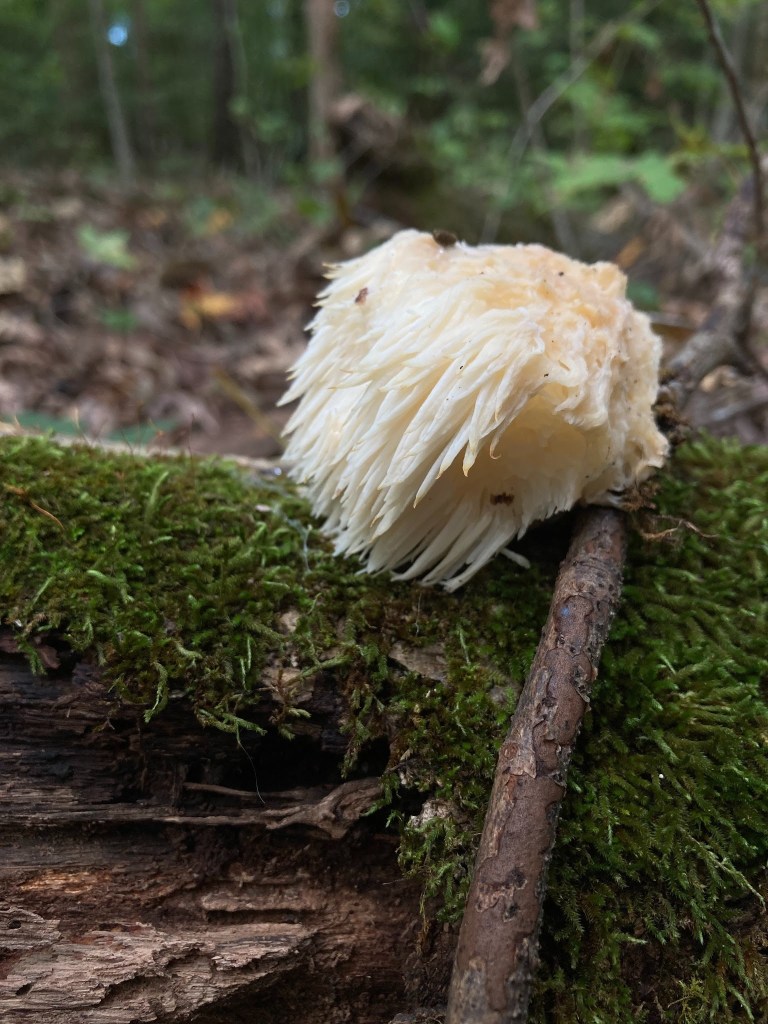
To identify the fruiting fungi, it is ideal to get a look at the underside which is called the hymenium which is the spore-bearing surface. Some mushrooms may have gills which are the thin, papery like structures that are located underneath the caps of the mushroom. Some may have false gills which are more like ridges rather than the papery structures. Some are spongy. And the craziest type of hymenium to me is the tooth or spinelike like the lionsmane mushroom below.
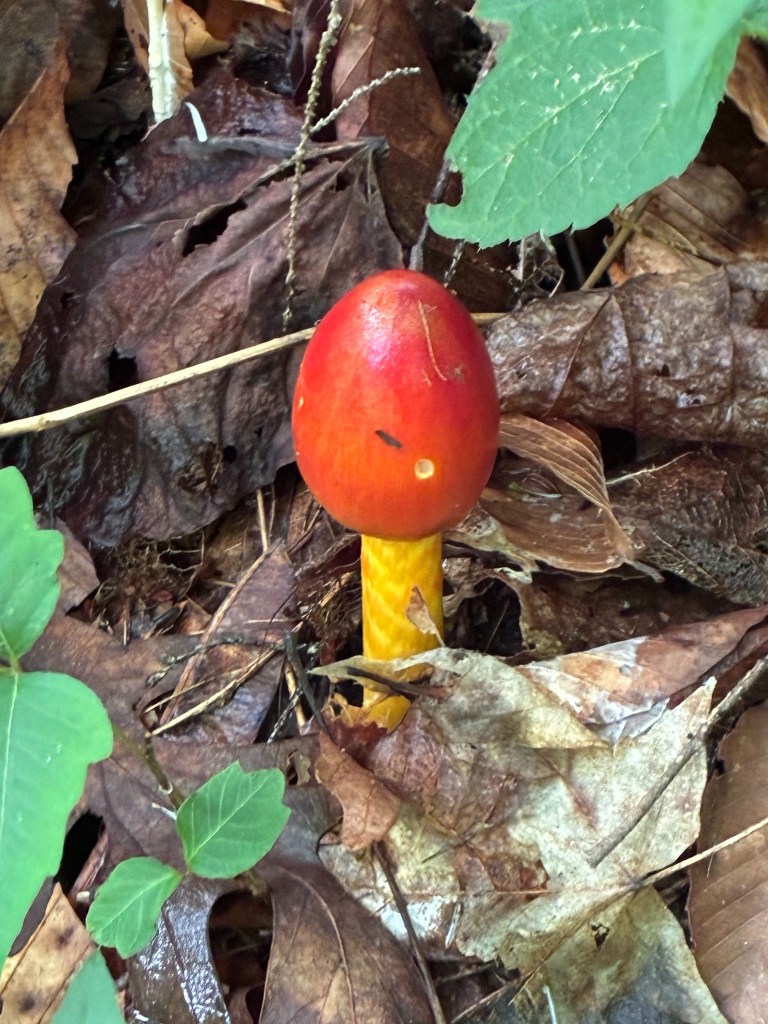
You can also identify the species by looking at where these mushrooms are growing and what they are growing near. For example, certain mushrooms grow under pine trees or oaks like Amanita jacksonii. Amanita jacksonii have a mycorrhizal relationship with these tree species which is a symbiotic partnership between the plant roots and the soil fungi. The fungi will help extend the tree roots network to take in water and nutrients, and the tree provides the fungi with sugars made through photosynthesis.
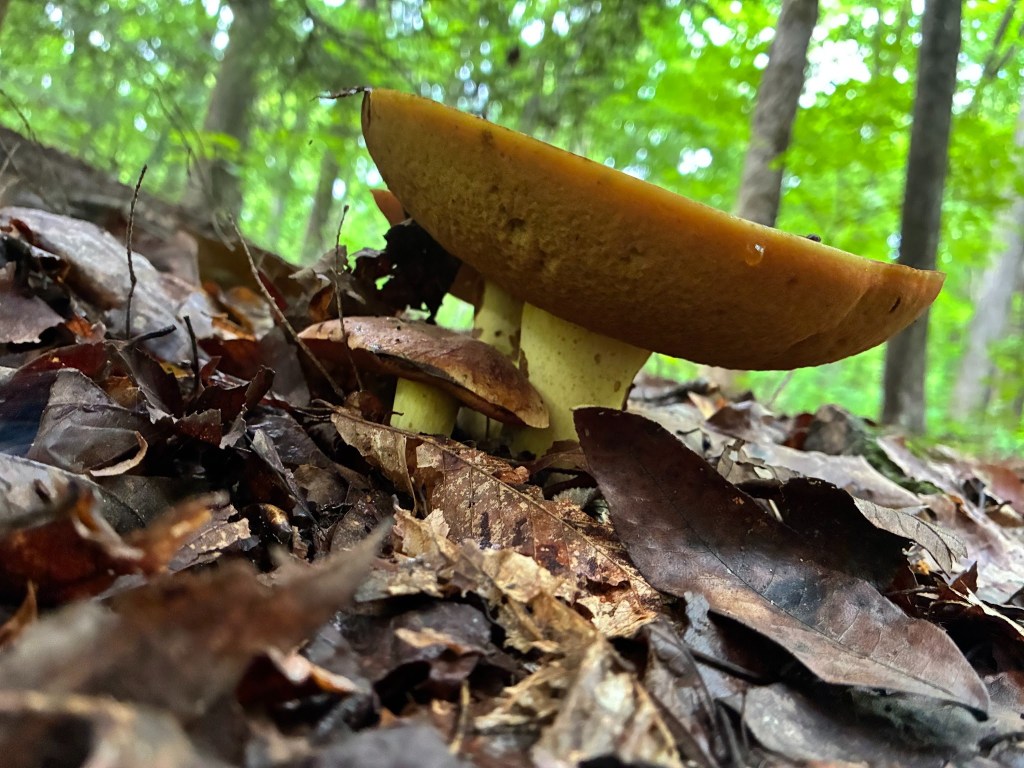
Some just grow along the forest floor like Boletes. Their undersides are spongy and they can grow to be pretty large! They are a sight to see. Boletes are also an example of the mycorrhizal relationship mentioned above. By identifying the tree canopy above can be an indicator for what species of bolete you see.
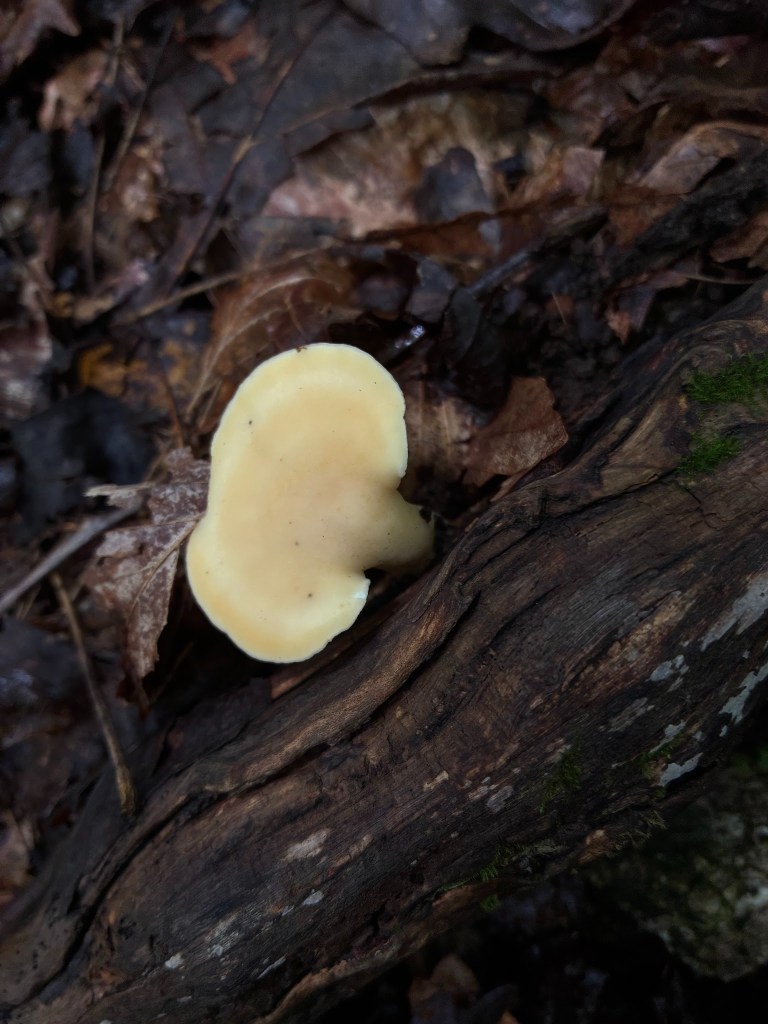
Some only grow on dead trees or fallen logs, these mushrooms are in the Shelf order. The mushroom below is a Loweomyces fractipes; they can be found on hardwood trees like maple, ash, or beech. This species is an example of saprophytic fungi. They are actively recycling right before our eyes! They feed on dead organic matter and break it down into usable soil nutrients.
There are also decomposers that are insects; detritoves like millipedes and pillbugs (rolly-pollies), as well as xyophages like termites and carpenter ants as I mentioned before. Beetles are found in both groups as there are many, many different species of beetles. 350,000 actually! As you can imagine, they don’t all eat the same stuff. Some are wood-boring and some eat dead plant matter. Detritoves and xyophages are definitely easy to miss as they are either crawling on the forest floor or inside/under a log, but they are there. It may just take a little extra effort to find them. Unfortunately, we cannot identify bacteria when out on a stroll because it’s microscopic! But, we can find indicators that bacteria is at work. Through smell, and through the tree composite.
It is important when identifying species to do so without disrupting their environment. With mushroom fruit, you can pluck them to get a better look at their gills by grabbing the base of the fruit, twisting and pulling up. Avoid pulling large chunks out of the dirt. When identifying insects, it is important to place any logs or rocks in the same spot after picking them up as they are vital for their microhabits.
To circle back, decomposition in forest is the driving power to convert dead organic matter into the nutrients cycle in the soil. The decay releases Carbon, Nitrogen, Phosphorus, and Potassium directly into the soil, supporting plants and promoting new plant growth. All decomposing organisms are important for a healthy and stable forest. The forest floor is where it all begins.
When looking for these organisms, it is our duty to leave no trace and place rocks and logs back where we found them. And when identifying mushrooms, it is best if you can avoid plucking mushrooms. If everyone picks one; there wouldn’t be anything left. Never clear a whole patch.
Thank you for reading! 🙂


Leave a Reply